



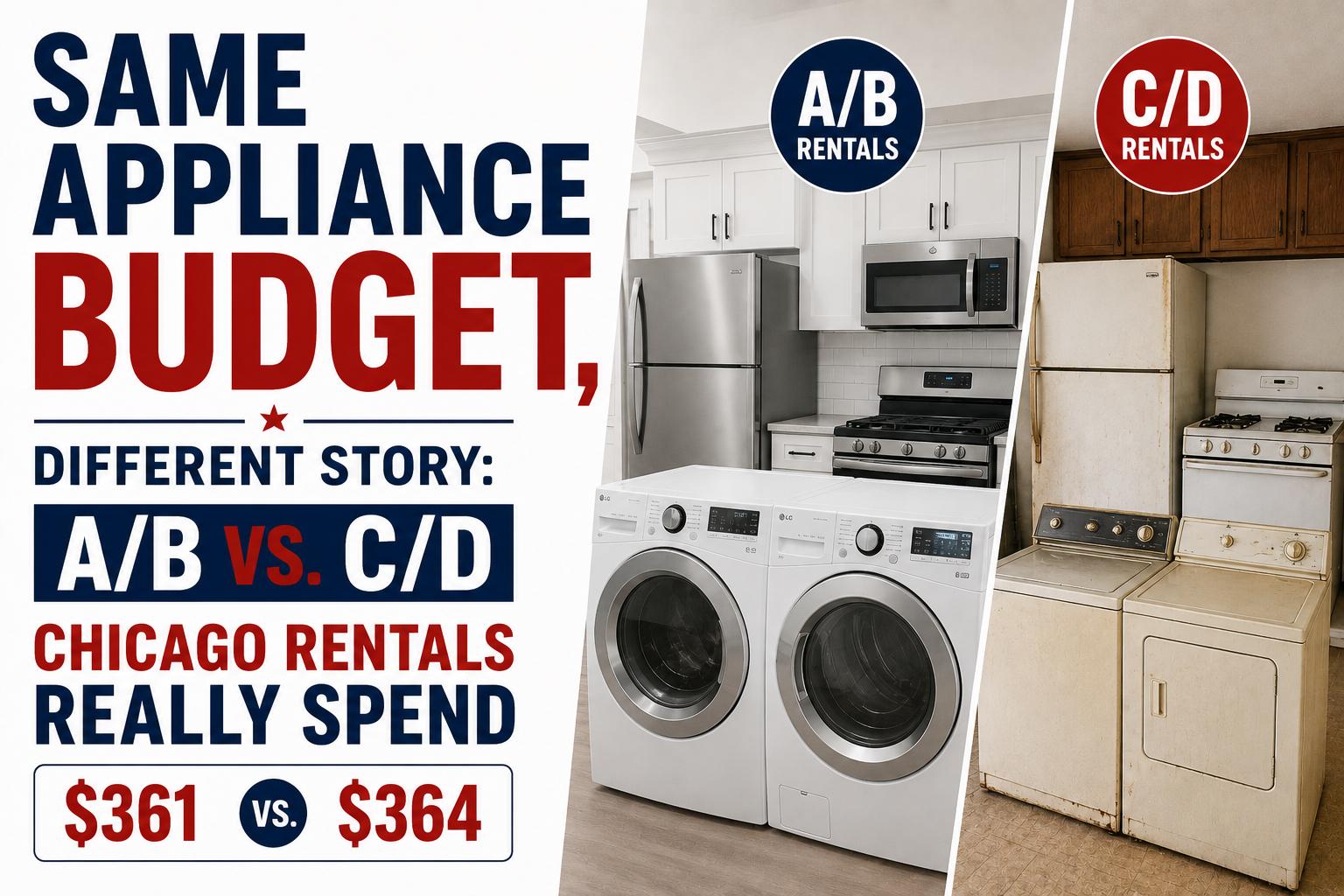
Mark Ainley has invested in hundreds of C and D class properties across a 20+ year career, plus hundreds of A and B class properties alongside them. That experience has produced a clear picture of how differently appliances get handled across neighborhoods, tenant bases, and the expectations that come with each property class. It’s one of those things that doesn’t get talked about enough, especially when newer Chicago investors are modeling out their numbers before buying in tougher parts of the city.
Appliances are an obstacle a lot of investors don’t plan for. They model rent, taxes, insurance, maybe a general maintenance line item, and call it a day. But appliances break. They need to be repaired. They need to be replaced. And depending on where a property sits, the dynamics around all of that change in ways that can surprise an unprepared owner.
The A/B vs. C/D Dynamic Most Investors Miss
One of the biggest differences that shows up across decades of Chicagoland investing: in C and D class neighborhoods, tenants often provide their own washer and dryer. In A and B class areas, that’s expected to be provided by the landlord. In some parts of C and D class, many landlords won’t even provide major appliances at all. They offer a rent concession or some other incentive for tenants to bring their own.
That can save money on the front end, but it introduces a whole different set of problems:
Tenants buying used appliances that already have roaches living in them.
Damage to hallways, stairwells, and common areas from moving heavy appliances in and out.
Issues with electrical or gas hookups when a tenant installs something themselves.
It’s not as clean as it sounds on paper. That reality had the GC Realty team wondering for a while: are appliances actually more expensive to maintain in C and D class neighborhoods, or does it just feel that way? Two years of appliance work order data across the portfolio settled the question.
Key Takeaways for Chicago Real Estate Investors
Annual appliance cost per property is essentially identical across class: $361 per year for A/B vs $364 for C/D.
But the composition is completely different. A/B sees more work orders at a lower cost per call; C/D sees fewer work orders but a higher rate of expensive replacements.
C/D properties replace appliances at a 29% rate vs 23% in A/B, and every single appliance category costs more per work order in C/D.
Dishwashers barely exist in C/D (22 work orders vs 242 in A/B), because they’re not part of the expected amenity package.
Washer and dryer work orders make up 24.7% of A/B appliance activity but only 19.6% in C/D, reflecting the tenant-supplied-appliance dynamic.
The repeat repair trap hits C/D harder: $828 average cost per repeat repair situation vs $746 in A/B, and 32% of C/D repeat repairs end in replacement anyway vs 22% in A/B.
First, Define Property Class
Wall Street has a fairly standard way of classifying real estate, but in the world of scattered-site property management across Chicagoland, the lines are even blurrier than they are in the institutional multifamily sector. A building’s class isn’t just about the building itself. It’s about the neighborhood, the tenant profile, the age of the housing stock, the rent levels, and a dozen other factors that all blend together.
For this analysis, properties were grouped into two buckets: A/B and C/D. Two reasons. First, it makes the data easier to digest. Second, the distinction between an A and a B (or a C and a D) can be subjective. One person’s B+ is another person’s A. Grouping into just two categories draws a cleaner line most investors would agree on: nicer areas with higher rents and newer housing stock versus tougher neighborhoods with lower rents and older housing stock.
For investors weighing whether to add C-class properties to their portfolio in the first place, GC Realty has a full-picture companion piece on three things to consider before investing in C class neighborhoods.
In the current 1,400+ property GC Realty portfolio, the properties that generated appliance work orders over the last two years broke down as follows:
Property Class | Properties with WOs | Work Orders |
A / B Class | 567 | 1,144 (74%) |
C / D Class | 223 | 408 (26%) |
The Surprise: Per Property Costs Are Nearly Identical
This one caught the team off guard. After 20+ years of feeling like appliances cost more in C and D class neighborhoods, the per-property numbers tell a different story.
Metric | A / B Class | C / D Class |
Annual Cost Per Property | $361 | $364 |
Avg Cost Per Work Order | $358 | $398 |
Replacement Rate | 23% | 29% |
Repair Rate | 77% | 71% |
Avg Repair Cost | $282 | $278 |
Avg Replacement Cost | $628 | $685 |
$361 per property per year for A/B. $364 per property per year for C/D. That’s essentially a wash at the top line. But don’t stop reading there, because the way that money gets spent is completely different. That’s where the real lesson lives.
C/D Properties Replace More and Repair Less
This is the biggest behavioral difference in the data. C/D properties have a 29% replacement rate versus 23% for A/B. For every 10 appliance work orders in a C/D property, nearly 3 are full replacements. In A/B properties, it’s closer to 2 out of 10.
The average repair cost is nearly identical ($278 C/D vs $282 A/B), but the average replacement in C/D costs $685 compared to $628 in A/B. That 29% replacement rate combined with higher replacement costs drives the per work order average up to $398 in C/D versus $358 in A/B, 11% more expensive per call in C/D.
Because A/B properties generate more calls per property (more appliances provided, including washers, dryers, and dishwashers), the annual per property cost evens out. The pattern is fewer, more expensive calls in C/D vs more, cheaper calls in A/B.
The Appliance Mix Is Different
This is what ties directly back to the tenant-supplied-appliance dynamic mentioned at the top of the article, and it shows up clearly in the numbers.
Appliance Category | A / B WOs | C / D WOs |
Dishwashers | 242 | 22 |
Washer/Dryer share of total | 24.7% | 19.6% |
Two things jump out immediately.
Dishwashers Barely Exist in C/D
Only 22 dishwasher work orders in C/D compared to 242 in A/B. A huge number of C/D class units simply don’t have dishwashers. It’s not part of the expected amenity package in those neighborhoods. That alone removes a significant line item from the C/D appliance budget.
Washer and Dryer Activity Runs Lower in C/D
Washer and dryer related work orders made up 24.7% of all A/B appliance work orders but only 19.6% in C/D. That’s the tenant-supplied washer and dryer dynamic showing up in real numbers. When tenants bring their own, those maintenance calls don’t hit the owner’s ledger.
Where to Go Deeper on Chicago Appliance Operations
Property-class behavior is one angle of a larger appliance data story. For investors who want the rest of the picture, GC Realty has published companion pieces that pair directly with this analysis:
• What Do Appliances Actually Cost Chicago Landlords? is the portfolio-wide $571,666 breakdown across 1,552 work orders.
• When Should Chicago Investors Repair vs. Replace Appliances? is the decision framework for the repeat repair trap discussed below.
• Chicago Landlord Secrets: Appliances and Housing Shortage digs into tenant-supplied appliance risks and real lifespan expectations in rental versus owner-occupied properties.
Investors who want GC Realty & Development handling appliance operations across either class of Chicagoland property can start with a free rental analysis from the team.
When C/D Appliances Do Break, They Cost More
Even though C/D properties generate fewer work orders per property, the ones that do come in tend to be more expensive. Every single appliance category costs more per work order in C/D than in A/B. Washers run 25% higher in C/D. Microwaves run 34% higher.
The C/D replacement rate sitting 6 percentage points above A/B (29% vs 23%) tells part of the story. Appliances in tougher neighborhoods tend to be older, get used harder, and are more likely to be past the point of economical repair when something goes wrong. The housing stock is generally older, which means the appliances that came with the property were often installed a long time ago.
The repair rate gap reinforces the pattern. In A/B properties, 77% of work orders are repairs. In C/D, it drops to 71%. Vendors are looking at these appliances and more frequently making the call that repair isn’t worth it. When the appliance stock is older and has been through more tenants, the replacement threshold gets crossed more often.
The Repeat Repair Trap Hits C/D Harder
The repeat repair trap (the same appliance getting repaired multiple times before eventually being replaced anyway) is more pronounced in C/D properties. The numbers:
Repeat Repair Metric | A / B Class | C / D Class |
Avg Cost Per Repeat Situation | $746 | $828 |
Share Ending in Replacement Anyway | 22% | 32% |
The average repeat repair situation in C/D cost $828 compared to $746 in A/B. And 32% of C/D repeat repairs eventually ended in replacement anyway, compared to 22% in A/B.
The operational takeaway: when a vendor has already been out once on a C/D property for the same appliance, the data says to lean heavily toward replacement rather than another repair attempt. The odds of getting stuck paying for both the repairs AND the eventual replacement are meaningfully higher in C/D than in A/B.
What This Means for a Chicago Investor’s Model
For A/B Properties
Budget around $360 per unit per year for appliances. The portfolio will see more work orders because more appliances are being provided (including washers, dryers, and dishwashers), but the per-call cost is lower and 77% of calls will be repairs, generally under $300. Appliance costs will be steady and predictable.
For C/D Properties
Budget the same $360 per unit per year, but expect the cash flow pattern to be lumpier. Fewer calls, but when they come they’re more likely to be replacements. Be especially careful about the repeat repair trap. If a vendor has already been out once, think hard before sending them again on the same unit.
If Considering Tenant-Supplied Appliances in C/D
Yes, it saves money on appliance maintenance. The data shows that clearly with fewer washer, dryer, and dishwasher work orders in C/D properties. But factor in the hidden costs:
Roach infestations from used appliances can cost hundreds in pest control across multiple units.
Damage from moving appliances in and out hits common areas (hallways, stairwells, doorframes).
If a tenant moves out and takes their appliances, the next tenant may not want a unit with no fridge or stove, which can extend vacancy.
Frequently Asked Questions About Appliance Costs by Property Class
Do C/D class Chicago rentals actually cost more per year for appliances?
No. Across two years of data, A/B class properties cost $361 per property per year for appliances and C/D came in at $364. The annual totals are essentially identical. The composition is what differs.
If the totals are the same, what’s different between the two?
A/B sees more work orders per property at a lower average cost ($358 per call). C/D sees fewer work orders per property but at a higher average cost ($398 per call) and a 29% replacement rate versus 23% in A/B.
Why do replacement rates run higher in C/D?
Older housing stock, older appliances, and heavier usage. Vendors are more likely to look at a C/D appliance and decide it’s past the point of economical repair. The repair rate drops from 77% in A/B to 71% in C/D, which is the same signal.
Are dishwashers really that rare in C/D properties?
Yes. Only 22 dishwasher work orders were logged in C/D properties across two years of data compared to 242 in A/B. Dishwashers aren’t part of the expected amenity package in most C/D neighborhoods, so they’re simply not there in most units.
Should a landlord let C/D tenants provide their own washer and dryer?
It’s a real trade-off. The data clearly shows fewer washer/dryer work orders in C/D (19.6% of activity vs 24.7% in A/B) because of tenant-supplied units. But that savings needs to be weighed against pest risk from used appliances, common-area damage from moving heavy units in and out, and the vacancy risk when a tenant leaves with their appliances and the next tenant doesn’t want a bare unit.
What’s the biggest operational lesson for C/D owners?
Be more aggressive about replacing on the second repair call. The repeat repair trap hits C/D properties harder: 32% of C/D repeat repairs end in full replacement anyway, and the average cost per repeat situation is $828 vs $746 in A/B. If a vendor has been out once on the same appliance, the math usually favors replacement on the second visit rather than paying for both.
Does higher per-call cost in C/D mean vendors are price gouging?
No. It reflects older appliances that are more likely to need full replacement and appliance categories that run more expensive across the board (washers 25% higher, microwaves 34% higher in C/D). Same vendors, different equipment profile.
The Real Takeaway
The data surprised the GC Realty team. After two decades of investing in both A/B and C/D class properties across Chicagoland, there was a clear expectation of a gap in per property appliance costs. The gap isn’t in the total. It’s in the composition.
A/B properties deliver more calls at a lower cost per call. C/D properties deliver fewer calls but more replacements at a higher cost per call. Both end up in roughly the same place annually, but they behave completely differently month to month and call to call.
Appliances can’t be managed the same way across different property classes. The decision framework for repair versus replace needs to be more aggressive in C/D. Preventive maintenance matters more because the cost of waiting is higher. And vendor relationships matter just as much in a C/D neighborhood as they do in an A/B neighborhood, maybe more, because the margin for error on each call is smaller.
Manage Both Classes on Purpose
The $360-per-property annual number works as a starting benchmark for any Chicagoland investor, but what actually separates owners whose appliance budgets hold from owners whose budgets blow up is how they manage the composition. Aggressive repair-vs-replace decisions in C/D. Steady preventive work in A/B. The same total cost, but two very different operational playbooks.
Investors who want GC Realty & Development running appliance operations across either property class (including vendor dispatch, repair-vs-replace decisions, and tenant-supplied-appliance policy) can call the office at 630-587-7400 or start with a free rental analysis to see what a specific property looks like on the operational side.